
The One Probiotic That Actually Helped Me: DE111 + PreforPro
If you're like me and have gut problems, you’ve probably tried a bunch of probiotics—and ended up feeling worse. I tried popular brands, powders, and capsules that claimed to help with digestion. But instead, many of them gave me more bloating, gas, constipation, or just didn’t do anything.
Eventually, I found out why. Most of these probiotics use bacteria that are too fragile. They can get destroyed in your stomach before they even reach your gut. That’s why I decided to dig deeper—and that’s when I found something that actually helped: a probiotic strain called DE111 (Bacillus subtilis) and a phage blend called PreforPro.
Why Most Probiotics Didn’t Work
Most probiotics use common bacteria like Lactobacillus or Bifidobacterium. The problem? These are not spore-forming, which means they can’t survive stomach acid very well. If they die before reaching your intestines, they can’t help your gut.
That’s what was happening to me. I was taking probiotics every day and feeling no better—or even worse. Then I discovered DE111, a special kind of spore-forming probiotic. It can survive harsh stomach conditions and actually get to where it’s needed: your gut.
Studies have proven that DE111 survives the digestive tract and makes it to the intestines. Once it’s there, it “wakes up” and starts working. One study even showed that it can help improve bowel movements and make digestion more regular (Cuentas et al., 2017).
What Makes DE111 So Special
DE111 is a type of Bacillus subtilis, which is a strong, safe, and well-researched bacterium. Its spore form protects it as it travels through your stomach. This means it doesn’t get destroyed before it reaches your gut.
Once it arrives, it becomes active and starts helping your digestion. Research shows that DE111 can reduce constipation, diarrhoea, and help normalize stool patterns (Cuentas et al., 2017).
Another study using a human ileostomy model confirmed that Bacillus subtilis DE111 spores remain viable through the gastrointestinal tract and germinate in the small intestine (Tam et al., 2023).
How PreforPro Helped Even More
While DE111 helped a lot, I still had some ups and downs. That’s when I found out about something called PreforPro. It’s not a probiotic—it’s a phage blend. Phages are tiny natural viruses that only attack bad bacteria in your gut, like certain types of E. coli. They don’t touch the good bacteria.
When these phages kill the bad bacteria, the leftovers actually become food for your good bacteria. This helps your healthy microbes grow stronger.
Studies on PreforPro show it can reduce bad bacteria without harming the good ones. Some people in these studies even had more of the good bacteria like Lactobacillus and Eubacterium after taking PreforPro (Febvre et al., 2019; Trotter et al., 2020).
That’s what happened to me. I noticed fewer flare-ups, less bloating, and more stable digestion overall. Even better, PreforPro is safe and gentle—there were no side effects in the studies (Trotter et al., 2020).
The Product That Worked for Me
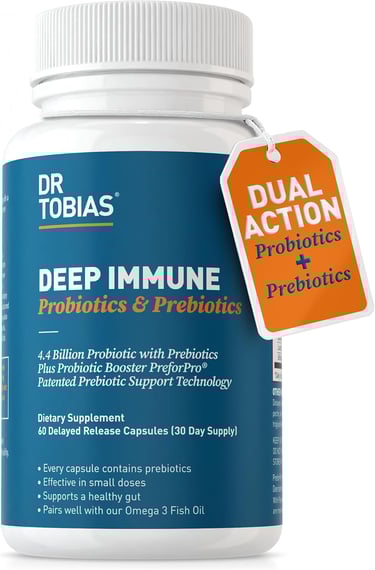
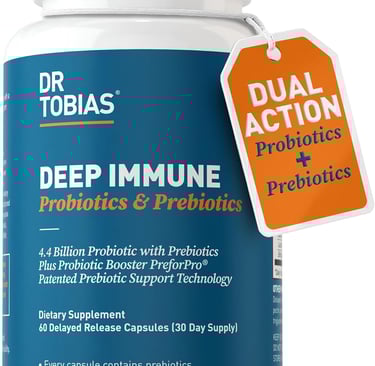
The product I’ve been taking is called Dr Tobias Deep Immune Probiotics & Prebiotics. It has both DE111 and PreforPro.
👉 You can find it here on Amazon.
It’s the only probiotic I’ve stuck with long-term because it actually helped. After trying so many others that didn’t work—or made things worse—this one gave me steady, lasting improvements.
A Helpful Research Tool
If you want to learn more about probiotics, I also highly recommend a site called ProbioticAdvisor.com. It’s a great place to look up different probiotic strains and see what medical conditions they treat.
👉 Visit probioticadvisor.com
Final Thoughts
Probiotics can be confusing, especially when so many don’t work. DE111 and PreforPro changed things for me. DE111 survives the gut and helps regulate digestion. PreforPro clears out bad bacteria and helps the good ones grow.
This combo worked when nothing else did.
Explore more articles related to Gut Health.
Scientific References
Cuentas, A.M., et al. (2017). Effects of Bacillus subtilis DE111 on Gastrointestinal Symptoms in Adults. Journal of Probiotics & Health, 5(2). https://doi.org/10.4172/2329-8901.1000189
Febvre, H.P., et al. (2019). PHAGE study: Effects of supplemental bacteriophage consumption on inflammation and gut microbiota in healthy adults. Nutrients, 11(3), 666. https://doi.org/10.3390/nu11030666
Trotter, V., et al. (2020). A randomized, double-blind study on the effect of B. lactis and bacteriophage supplementation on gut health. Journal of Functional Foods, 67, 103846. https://doi.org/10.1016/j.jff.2020.103846